A COMPLETE GUIDE
What pressure should my boiler be?
By LM Plumbers 2025
We take a deep dive into the ideal pressure for your boiler
If you’ve ever looked at your boiler’s pressure gauge and wondered, “Is that normal?”, you’re not alone. Homeowners often worry whether their boiler pressure is too high or too low — and for good reason. Boiler pressure plays a vital role in keeping your central heating system working efficiently and safely. In this guide, we’ll explain everything you need to know about the ideal boiler pressure, how it changes in different seasons, what causes pressure problems, and simple steps you can take to keep your system running smoothly.
What Is the Ideal Boiler Pressure?
- For most modern boilers, the recommended working pressure is between 1.0 and 1.5 bar when the system is cold. Manufacturers generally suggest that 1.3 bar is the “sweet spot” for keeping your boiler efficient and safe. Why is this range so important?
- If the pressure is too low, your boiler may not circulate hot water properly, leading to lukewarm radiators or a system that won’t switch on at all.
- If the pressure is too high, it puts unnecessary strain on your boiler components, which can lead to leaks, system failures, or long-term damage.
Boiler pressure in different seasons
- Your boiler pressure doesn’t stay at one fixed level all year round. It naturally fluctuates depending on how often you use your heating.
Best boiler pressure in the summer
- During warmer months, you’ll use your boiler less frequently. This period of inactivity can sometimes cause your pressure reading to dip slightly. It’s not uncommon to see readings between 0.9 and 1.1 bar in summer, especially with combi boilers. If your pressure drops below 0.8 bar, that’s usually a sign it’s too low and you may need to top it up using the filling loop.
Best boiler presuure in the winter
- When winter arrives, your boiler works harder to heat your home and provide hot water on demand. As water heats and expands inside your pipes and radiators, it can cause the pressure to rise. It’s normal to see your pressure increase by 0.3 to 0.5 bar when the heating is on. So, if your boiler is at 1.3 bar when cold, it may rise to around 1.6–1.8 bar when in use. However, if your pressure climbs above 2.0 bar, or rises more than 1 bar higher than its starting point, this could indicate a problem with the expansion vessel or pressure relief valve.
How to check your boiler pressure
- Most modern boilers have a pressure gauge on the front.
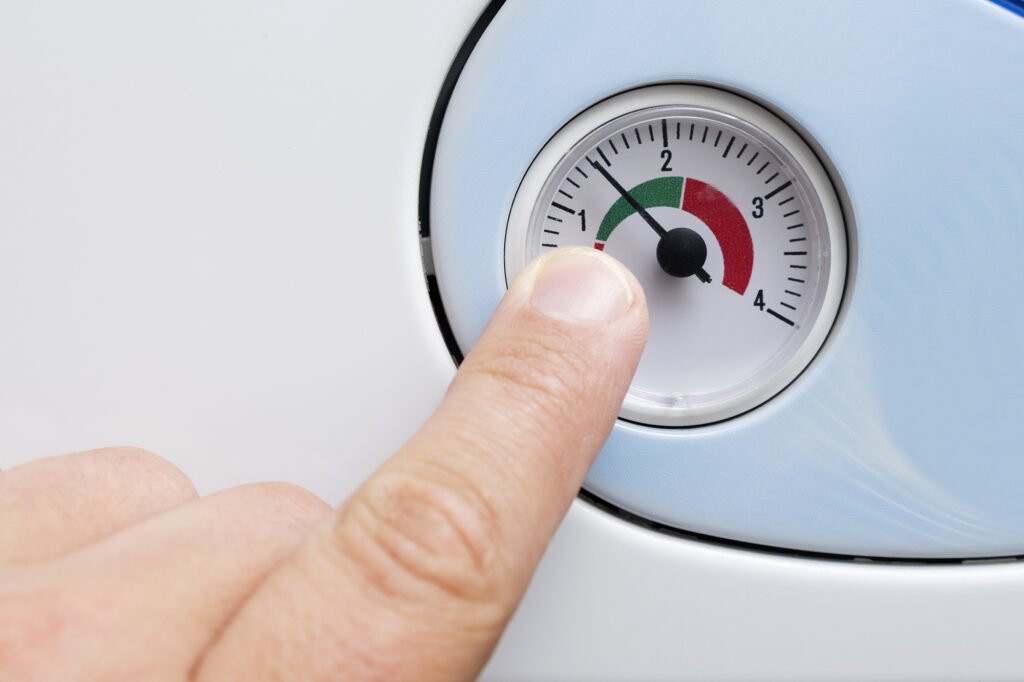
- Analogue gauges have a needle that points to the current pressure, with a green zone marking the ideal range and red zones for too high or too low.
- Digital displays will show the exact bar reading on your control panel.
- Checking only takes a few seconds and can save you from bigger problems later on. Ideally, check your boiler pressure at least once a month, especially during peak heating seasons.
Signs that your boiler pressure is too low
- Low boiler pressure is one of the most common issues homeowners face. Signs include:
- Radiators not heating up fully.
- No hot water from your taps or shower.
- The boiler shutting down or locking out.
- On some models, such as Vaillant combi boilers, the system will display a flashing warning light when the pressure drops below 0.8 bar.
How to repressurise a boiler
- If your boiler pressure is too low, you can usually fix it by adding water through the filling loop:
- Turn off your boiler.
- Locate the filling loop (a silver, flexible hose under the boiler).
- Slowly open the valves until you hear water flowing.
- Watch the pressure gauge rise to around 1.3 bar.
- Close the valves and switch the boiler back on.
- If your pressure keeps dropping after topping up, there may be a leak somewhere in the system. In that case, it’s best to call a Gas Safe engineer.
Signs that your boiler pressure is too high
- High pressure can be just as problematic as low pressure. Symptoms include:
- The pressure gauge reading above 2.0 bar when the system is running.
- Leaks around radiators or pipes.
- Strange noises coming from your boiler.
How to reduce boiler pressure
- If you’ve overfilled your system when topping it up, don’t panic — it’s an easy fix.
- Bleed a radiator or towel rail using a bleed key. Place a container underneath to catch water, then release a small amount until the pressure gauge drops back to around 1.3 bar.
- Double-check the filling loop is fully closed, as even a slightly open valve can keep letting water in.
- If the pressure keeps climbing despite these steps, there could be a fault with the expansion vessel or pressure relief valve, which requires a professional repair.
Why does my boiler pressure keep dropping
- A common complaint from homeowners is that their boiler pressure keeps dropping even after repressurising. This usually points to one of three issues:
- Leaks in the system – even small drips from pipes or radiators can cause ongoing pressure loss.
- A faulty pressure relief valve – if this valve isn’t sealing properly, it can allow water to escape.
- Problems with the expansion vessel – if the vessel is damaged, it can’t absorb water expansion, leading to unstable pressure.
- If you suspect a leak or repeated pressure loss, it’s important to contact a Gas Safe registered engineer rather than trying to fix it yourself.
Is boiler pressure the same as water pressure
- One common source of confusion is the difference between boiler pressure and water pressure. They’re not the same thing.
- Boiler pressure refers to the pressure of water circulating inside your central heating system.
- Water pressure refers to the flow of water coming into your home from the mains supply.
- Low mains water pressure might cause weak showers, but it doesn’t directly affect your boiler’s pressure. Similarly, issues with boiler pressure won’t reduce your tap water flow.
When you should stop and call an expert
- While minor pressure adjustments are safe to do yourself, there are times when you should always call a professional:
- Pressure rising above 2.5 bar.
- Boiler pressure dropping repeatedly, even after topping up.
- Visible leaks or water damage around your boiler.
- Strange noises, banging, or whistling when the heating is on.
- A Gas Safe registered engineer can diagnose the underlying problem and carry out repairs safely. Attempting to fix internal components yourself can be dangerous and may void your boiler warranty.
Boiler pressure safety tips
- Keeping your boiler at the correct pressure isn’t just about efficiency — it’s also about safety. A well-maintained boiler reduces the risk of leaks, breakdowns, and unnecessary wear on key components. Here are some important safety tips to follow:
- Check your boiler pressure regularly – Get into the habit of looking at your pressure gauge at least once a month. This allows you to catch small issues before they turn into bigger problems.
- Top up slowly and carefully – When repressurising your system, always open the filling loop valves gradually. Adding water too quickly can cause the gauge to overshoot, leaving you with high pressure.
- Never ignore big pressure changes – A small rise or fall is normal, but if you notice the gauge climbing above 2.5 bar or dropping below 0.7 bar, it’s a warning sign. Switch off your boiler and call a professional.
- Bleed radiators when necessary – Air trapped inside your heating system can affect both pressure and efficiency. If you notice cold spots on radiators or the gauge creeping higher than normal, bleeding your radiators can help stabilise the system.
- Schedule an annual boiler service – A qualified Gas Safe engineer will not only check pressure-related components such as the expansion vessel and pressure relief valve, but also ensure your entire boiler is working safely.
- Know your boiler’s manual – Every boiler brand has slightly different operating instructions. Keeping your manual handy means you’ll know the correct pressure range and troubleshooting steps for your exact model.
- By following these simple but effective steps, you’ll keep your boiler in the safe operating zone, extend its lifespan, and avoid the stress of unexpected breakdowns.
Boiler pressure safety tips
-
So, what pressure should your boiler be? In most cases, the ideal range is between 1.0 and 1.5 bar when cold, rising slightly to 1.5–1.8 bar when heating is on. If your pressure is consistently too low or too high, it could indicate an underlying issue that needs professional attention.
By checking your gauge regularly and knowing how to make small adjustments, you’ll keep your boiler working efficiently, extend its lifespan, and avoid unnecessary breakdowns. If you’re still unsure about your boiler pressure or keep experiencing problems, don’t hesitate to contact our Gas Safe team for expert advice and support.